

Featuring insights from Deb Newell, consultant, operator, tech founder, MBA, and PhD candidate.
If you’re leading a property management company right now — or responsible for hiring within one — you’re likely asking some version of the same questions:
- Why does growth feel harder than it should?
- Why are managers consistently overwhelmed, even when headcount increases?
- Why does communication break down, even inside smaller teams?
- How do we scale operations without creating internal strain?
These aren’t isolated frustrations; they’re patterns. So we sat down with Deb Newell to unpack what she’s seeing across more than 600 discovery calls, M&A engagements, and consulting projects within the property management space.
Here’s what hiring managers, operational leaders, and SaaS-focused property management operators need to understand as they plan for 2026 — and what scalable growth actually requires:
What Is the Biggest Risk to Property Management Companies in 2026?
Why Are So Many Teams Disengaged Right Now?
Is the “100 Doors per Person” Rule Real?
Why Does Communication Break Down Even in Small Teams?
Should We Add More Tech in 2026?
What About AI — Will It Fix Maintenance and Service Bottlenecks?
I’m a Solo Operator Under 50 Doors. What Should I Focus On?
Why Should I Build an Org Chart if I’m the Only Employee?
What’s the Single Biggest Opportunity for PM Companies in 2026?
What Is the Biggest Risk to Property Management Companies in 2026?
Deb says the greatest threats are internal, not external. And the greatest opportunities are structural, not tactical. For leaders, that distinction matters because it points towards internal organization structures. The constraint isn’t growth — it’s whether the organization has the operational maturity to support it.
When roles lack clarity, expectations are inconsistent, communication breaks down, and workflows are improvised, growth does not solve the issue, it magnifies it. Adding more doors without strengthening the foundation only compounds the strain placed on managers, support staff, and systems.
While we might want it to, growth does not repair structural weaknesses. Instead, it makes them even more prominent.
As we move into 2026, the companies that scale sustainably will not be the ones chasing volume. They will be the ones investing in clarity, defined responsibilities, documented workflows, and organizational design that can support expansion without creating internal instability.
Why Are So Many Teams Disengaged Right Now?
Deb referenced that a significant number of employees report feeling disengaged. According to a Gallup survey, U.S. employee engagement has reached a 10-year low, suggesting significant workplace issues.
While some might feel the issue is with people themselves, low engagement is rarely a talent issue. Often, it’s a structural one.
Here’s the pattern Deb sees repeatedly: a company hires capable people, growth accelerates, and doors are added quickly. Revenue increases. Complexity increases. Communication increases.
But the organizational structure stays largely the same. Roles are not redefined. Reporting lines remain blurry. Expectations evolve informally instead of intentionally. Leadership capacity doesn’t expand.
Instead of redesigning the system, companies stretch the existing team to carry more. And high performers will carry it — for a while. They solve problems quietly. They absorb additional responsibilities. They work longer hours. They compensate for unclear processes and incomplete workflows.
From the outside, the company appears to be handling growth well. But internally, pressure builds — leading to employee burnout, reactive rather than proactive management, and a gradual erosion of accountability and service quality.
Avoiding this requires foresight. Managers, leaders, and executives must look beyond immediate hiring needs and intentionally design an organization that can support the next stage of growth. That means redefining roles as complexity increases, expanding leadership capacity before strain becomes visible, and creating clear expectations to evolve with the business.
Sustainable scale doesn’t happen because strong employees “figure it out.” It happens because leadership builds the structure that allows them to succeed.
Is the “100 Doors per Person” Rule Real?
While you’ll often hear people say that one manager per 100 doors is common, every property management company is different. As Deb emphasized, context determines capacity. To find what works best for your business, you’ll need to take into consideration:
- Market type
- Client mix
- Property class
- Support structure
- Workflow maturity
- Maintenance volume
- Leasing structure
- And more
Two companies can each manage 400 doors and require completely different staffing models. One may operate efficiently with four well-defined roles and strong backend support. Another may need 12 team members due to portfolio complexity, fragmented processes, or high-touch service expectations.
Neither is inherently right or wrong. Every property management business is different — and its support structures should reflect its realities. A staffing model that works in one market, asset class, or organizational culture may fail in another. Capacity is not just about door count; it’s about how the work flows through the organization.
Why Does Communication Break Down Even in Small Teams?
This was one of the most consistent themes across Deb’s discovery calls, likely because many leaders assume communication breakdown only happens once a company becomes large. In reality, the signs often appear much earlier.
On small teams, communication rarely fails because there are too many people involved. It typically breaks down because there isn’t enough structure guiding how information moves through the organization. In early growth stages, companies rely on proximity and personality — conversations happen organically, responsibilities feel understood, and problems are solved in real time. For a while, that works.
As portfolios expand, however, complexity increases. Maintenance volume rises, owner expectations evolve, and additional systems are layered in. The business becomes more sophisticated, but communication habits often remain informal.
When communication relies on memory instead of defined workflows, even a four-person team can experience friction. The issue isn’t team size — it’s whether structure has kept pace with growth.
Should We Add More Tech in 2026?
Deb’s perspective on this is nuanced and particularly relevant for SaaS leaders operating within the property management space.
The companies that will win in 2026 won’t be the ones with the largest or most impressive tech stacks. They will be the ones with clean, well-defined workflows, reliable and actionable data, high platform adoption across their teams, and consolidated systems of record that support decision-making rather than complicate it.
Too often, technology is added as a solution to operational strain when the underlying issue is a lack of process discipline. Disconnected tools create friction between departments. Low adoption quietly erodes return on investment. Manual workarounds compromise visibility and introduce risk into reporting, compliance, and client communication.
If a team is not fully leveraging the platforms it has already invested in, layering in another solution rarely resolves the problem. It often increases complexity and diffuses accountability.
Technology is a powerful accelerator, but it cannot compensate for unclear workflows or inconsistent execution. Operational maturity — defined by structured processes, consistent system usage, and disciplined oversight — matters far more than the size of a company’s tech stack.
What About AI — Will It Fix Maintenance and Service Bottlenecks?
Artificial intelligence (AI) can absolutely enhance efficiency, but it does not replace judgment or emotional intelligence.
On paper, maintenance coordination looks straightforward: receive the request, assign the vendor, and follow up once the work is complete. In practice, however, it is far more nuanced. Teams often diagnose issues with incomplete information, manage resident frustration, weigh cost against urgency, and coordinate communication across property owners, vendors, and internal staff simultaneously.
Technology — including AI — can streamline portions of workflows. It can automate ticket routing, improve response times, surface data patterns, and reduce administrative burden. But it cannot navigate tone, de-escalate tension, or make contextual decisions that balance financial impact with client relationships.
Property management is, at its core, a people-centric business. Technology supports execution, increases visibility, and enhances efficiency, but the people involved manage relationships and ultimately drive outcomes.
As leaders plan for 2026, this distinction matters. Investing in automation without investing in capable, well-structured teams creates an imbalance. Your hiring strategy, role clarity, and leadership development still determine performance — even in an AI-enabled environment.
I’m a Solo Operator Under 50 Doors. What Should I Focus On?
For solo operators, the early growth phase often feels manageable — until it doesn’t. According to Deb, she typically sees strain become visible somewhere between 50 and 65 doors. At that point, the workload shifts from busy to burdensome. Communication becomes reactive, response times stretch, and long-term planning gets pushed aside by daily demands.
This tension is not a signal to push harder. It’s a signal to delegate.
The first strategic hire is not always a licensed manager. In many cases, it’s a capable property management virtual assistant who can remove operational challenges from your plate — handling documentation, coordinating maintenance follow-ups, managing inbox flow, and supporting system organization. The goal is not simply to reduce workload, but to protect your capacity for higher-level work.
As the business owner, your time is most valuable when focused on growth initiatives, strengthening client relationships, refining service standards, and setting strategic direction. If you are consumed by task-level coordination, the business cannot scale sustainably.
And even if you are operating solo, you still need a defined organizational structure. Clear workflows, documented processes, and intentional role design should not wait until you hire a team. Structure is what allows you to transition from operator to leader when growth demands it.
Why Should I Build an Org Chart if I’m the Only Employee?
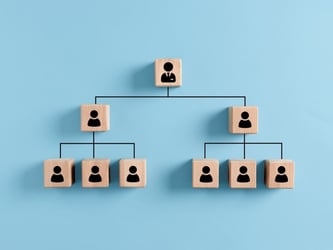
An organizational chart reflects vision, not headcount. Many solo operators assume org charts are tools for larger teams, but Deb often builds them for companies with just one or two employees to clarify where the business is going.
She frequently color-codes the “next hire” within the chart, identifying which responsibilities will eventually move off the owner’s plate and into a defined role. Even if your name fills every box right now, those boxes represent future structure, hiring cadence, role clarity, and intentional scaling.
Intentional growth consistently outperforms reactive growth, especially in a business as operationally complex as property management.
What’s the Single Biggest Opportunity for PM Companies in 2026?
For Deb, operational maturity is the clearest differentiator heading into 2026. The companies positioned to grow sustainably are the ones that have invested in clear roles, defined expectations, strong frontline managers, documented SOPs, disciplined communication practices, and the right people in the right seats. They are also leveraging technology fully — not just purchasing it, but ensuring adoption is consistent and strategically aligned with workflow.
Operational maturity is what turns activity into performance.
As Deb stated plainly, “If you lose your people, you’re in trouble.” In property management, institutional knowledge, client relationships, and operational rhythm live within your team. When turnover increases or engagement erodes, performance becomes fragile.
Growth without team investment is unstable. It may look impressive from the outside, but internally, it strains systems and people. Growth built on a strong internal foundation, however, is resilient. When structure is sound, accountability is clear, and communication flows through defined processes, scale feels controlled rather than chaotic.
Free Course: Learn Pro Communication Skills in Just 10 Minutes
Final Thought for Hiring Managers & SaaS Leaders on Hiring, Structure, and Scalable Growth in 2026
If you’re leading hiring inside a growing property management company, the takeaway is simple: don’t wait until you’re overwhelmed to act — and invest in your people like your business depends on it. Because it does.
Growth isn’t about speed. It’s about readiness. The companies that feel stable in 2026 won’t necessarily be the fastest-growing; they’ll be the most operationally mature. When structure is strong, growth creates momentum instead of chaos.
If you’re ready to make your next property management hire, get started with VPM Solutions today.